No products in the cart.
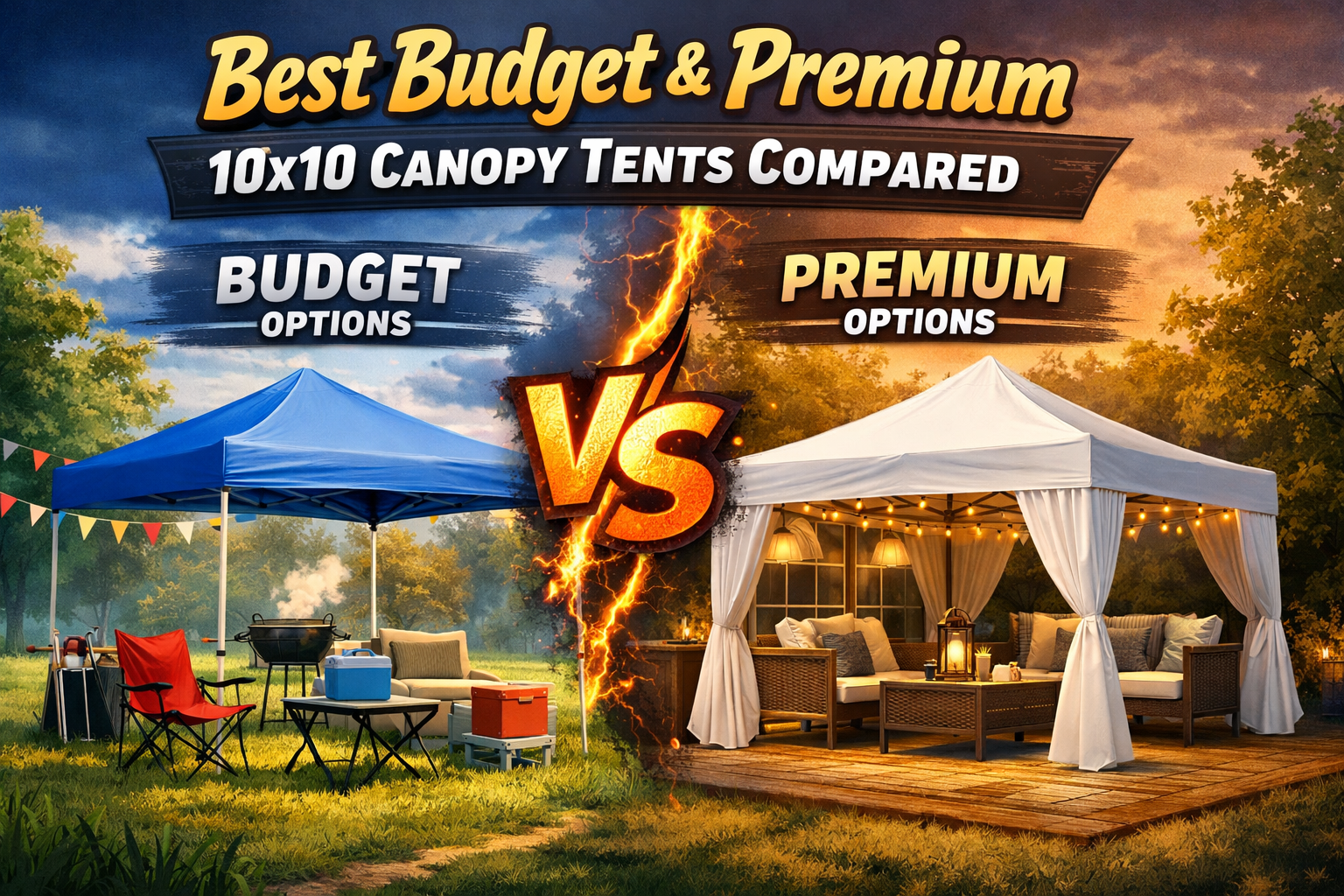
Buying a 10×10 canopy tent sounds straightforward until you start looking. There are hundreds of options across a massive price range, and the difference between a $150 tent and a $600 tent isn’t always obvious from a product listing. Some budget tents genuinely surprise you. Some premium ones are overpriced for what they deliver.
So how do you actually choose?
At New York Backdrop Printing, we work with vendors, event organizers, brand teams, and small businesses across New York City every single day. We’ve seen what holds up in the field and what doesn’t. This guide breaks down the real differences between budget and premium 10×10 canopy tents — so you can spend your money where it actually matters.
The canopy tent market has exploded over the last few years. More manufacturers, more price points, more options — which sounds like a good thing, but it creates a lot of noise. Budget tents have gotten better. Premium tents have gotten more accessible. And there’s a middle range that’s hard to evaluate without some context.
The comparison matters because the right choice isn’t always the most expensive one. It depends on how often you use the tent, what conditions you’re dealing with, whether you need custom branding, and how long you need it to last. A vendor doing two events a year has very different needs than a brand team activating every weekend through the summer.
This guide gives you the honest breakdown.
Budget canopy tents typically fall in the $100 to $250 range. At that price point, you’re working with certain trade-offs that are worth understanding before you buy.
Most budget tents use steel frames with thinner tubing — typically around 1 inch in diameter. Steel isn’t bad by default, but thinner tubing bends more easily under lateral wind load, and the joint connectors tend to be plastic or low-grade metal that cracks after repeated use.
The slider mechanism — the part that expands the canopy — is often the first thing to go on a budget frame. Plastic sliders wear out faster than metal ones, and when a slider fails mid-event, the whole tent is compromised.
That said, for occasional use — a few events a year on calm days — a steel-frame budget tent can serve you well for a season or two.
Budget canopies typically use 150D to 300D polyester. Lower denier means a thinner, less dense weave. That affects UV protection, water resistance, and print quality if you ever want to go custom.
Most budget fabric offers basic UV protection and light water resistance — enough for a partly cloudy day but not reliable in heavy rain. Seams are usually stitched but not taped, which means water finds its way through under sustained rainfall.
One thing to watch: fire certification. Many budget tents skip CPAI-84 fire-retardant certification to cut costs. If you’re setting up at a New York City permitted event, that certification is often required. Always check before you buy.
Budget tents are generally simple to set up — the pop-up mechanism works on most of them. The issue is consistency. After repeated use, sliders stiffen, legs become harder to adjust, and the overall setup takes longer than it did when the tent was new.
If you’re not sure how much you’ll actually use a tent, starting with a budget option is reasonable. Just go in with clear expectations about what it can handle.
Premium canopy tents sit in the $350 to $700+ range for the base structure. Here’s where that extra investment goes.
Premium tents use commercial-grade aluminum frames with tubing that’s typically 1.5 to 2 inches in diameter. Aluminum is inherently lighter than steel and naturally rust-resistant, which matters for anyone storing a tent in variable conditions or using it in humid, coastal, or rainy environments.
More importantly, premium aluminum frames use reinforced corner castings and metal slider mechanisms rather than plastic. The corners are where failure happens under wind stress — a well-made corner joint distributes load properly and lasts years of repeated setup and breakdown.
Most commercial-grade aluminum frames are rated for 40 to 50 mph wind resistance when properly anchored. That doesn’t mean you leave them up in a thunderstorm, but it means they handle typical outdoor event conditions without bending or collapsing.
Premium canopies use 600D polyester or higher — denser, heavier, and more durable than budget fabric. The difference in UV protection is significant: good 600D fabric with a quality coating blocks 98% or more of UV rays, compared to 70–80% on budget options.
Water resistance on premium canopies goes further too. Taped seams, PVC or PU coating, and tighter weaves mean you can set up in light to moderate rain without worrying about drips coming through the top.
For custom printing, fabric quality makes a visible difference. Dense, smooth polyester holds dye sublimation ink far better than thin, loosely woven material. Colors are sharper, gradients are cleaner, and the print stays vibrant through repeated outdoor use.
Premium frames often include additional crossbars and tension components that make the whole structure more rigid under load. Some commercial-grade tents also include adjustable leg heights — useful when you’re setting up on uneven ground, which happens more than you’d expect at outdoor events.
Weight bag compatibility is also better on premium tents. The leg feet are designed to accept standard sandbag attachments securely, which is critical for NYC events where staking into concrete isn’t an option.
If you’re using your tent more than five or six times a year, the premium investment pays for itself quickly in avoided replacements and repairs.
Here’s the honest comparison across the factors that matter most:
Frame Material Budget tents use thin steel with plastic joints. Premium tents use commercial aluminum with reinforced metal joints. Premium wins on durability, weight, and rust resistance.
Fabric Weight Budget ranges from 150D to 300D polyester. Premium starts at 600D. Premium wins on UV protection, water resistance, and print quality.
Wind Resistance Budget tents handle mild breezes with proper anchoring. Premium tents are rated for 40–50 mph with anchoring. Premium wins for outdoor reliability.
Setup Durability Budget mechanisms wear down noticeably after 20–30 uses. Premium mechanisms maintain smooth operation for hundreds of setups. Premium wins for frequent users.
Fire Certification Inconsistent on budget options. Standard on most commercial-grade premium tents. Premium wins for event compliance.
Custom Printing Possible on budget fabric but results are often dull and faded. Premium fabric with dye sublimation printing produces sharp, vibrant, long-lasting graphics. Premium wins significantly.
Price Budget runs $100–$250. Premium runs $350–$700+. Budget wins on upfront cost, but cost-per-use often favors premium for regular users.
One area where the budget vs premium comparison becomes especially clear is custom printing.
A 10×10 canopy tent with your logo and brand colors is one of the most effective marketing tools for any outdoor business or event team. But the quality of that print depends heavily on the fabric underneath it.
Budget fabric absorbs ink unevenly. Colors look muted. Fine details blur. And because the fabric itself degrades faster, the print degrades with it — you might start with something that looks decent and end up with a faded, crumpled mess after a season.
Premium fabric — specifically high-density polyester designed for dye sublimation printing — holds color differently. The ink bonds with the fibers directly, producing graphics that are sharp from day one and stay that way through folding, weather, and repeated use.
At New York Backdrop Printing, every custom canopy we produce uses commercial-grade fabric and dye sublimation printing. We’ve seen firsthand how much the substrate matters. A great design on bad fabric looks bad. The same design on good fabric looks exactly the way it’s supposed to.
New York City outdoor events have specific demands that affect which tent makes sense.
Most city events are on concrete or asphalt — no staking. That means weight bags are mandatory, and you need a frame with leg feet that hold them securely. Budget frames often have narrow leg ends that don’t work well with standard weight bags.
Fire certification is required at most NYC-permitted outdoor events. If your tent isn’t CPAI-84 certified, you may be turned away at setup. This eliminates many budget options right away.
Weather is unpredictable. Summer storms roll in fast, and having a tent that handles wind and rain without drama is worth the extra cost if you’re doing regular events.
And finally, appearance matters. In a row of vendors, the tent that looks professional and branded draws more foot traffic. It’s not just aesthetics — it’s a direct driver of business.
Here’s the honest answer:
Buy budget if you’re doing a handful of events per year, you don’t need fire certification, you’re not planning custom printing, and you want to minimize upfront cost.
Buy premium if you’re doing regular events, you need fire certification, you want custom branding that actually looks good, and you expect the tent to last more than one season.
For most businesses and vendors who take their outdoor presence seriously, the premium route is the smarter long-term spend. The frame lasts longer, the setup is more reliable, the print quality is dramatically better, and the overall experience — for you and your customers — is just cleaner.
At New York Backdrop Printing, we specialize in custom printed canopy tents built on commercial-grade frames. Whether you need a fully branded setup with printed sidewalls and valances or a clean, logo-forward canopy top, we handle the whole process in-house — artwork, proofing, printing, and finishing.
We work with businesses and event teams across New York City and beyond. Fast turnaround, direct communication, and printing quality you can actually see the difference in.
If you’re ready to invest in a 10×10 canopy tent that works as hard as you do, get in touch with our team. We’ll walk you through your options and get you set up with something built to last.
When businesses and event organizers across the city need signage that truly performs, 18oz Blockout

In today’s fast-paced world, businesses, event planners, and individuals often find themselves

Whether you’re setting up at a weekend farmers market, hosting an outdoor birthday party, or running

When it comes to affordable, high-impact marketing materials, few options rival the versatility and durability
Make Your Brand Impossible to Ignore In a city that never sleeps, standing still is not an option. New